
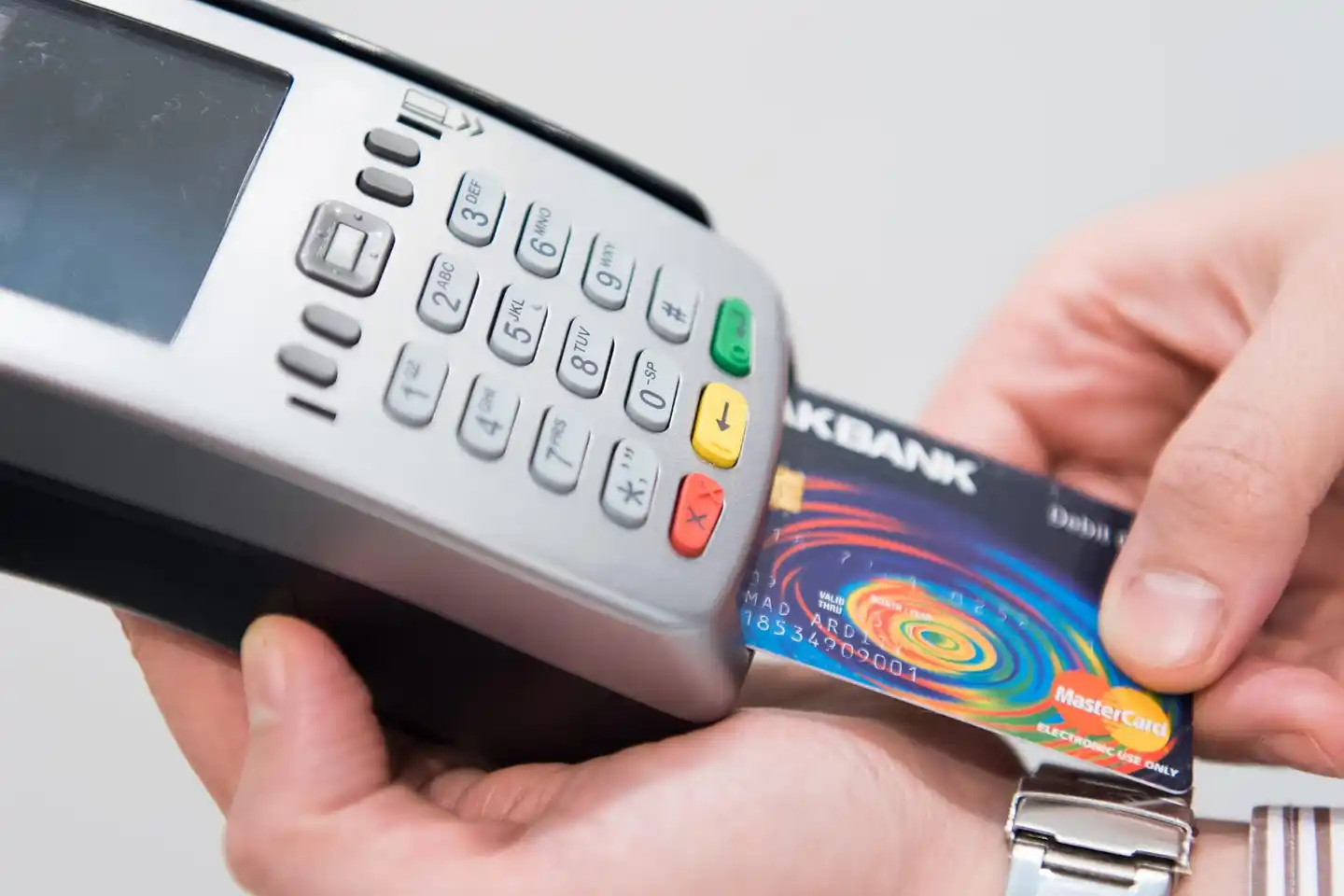
Buying in NZ — every route
Where to buy a hardware wallet in New Zealand
A small market means patchy stock, so it pays to know all three routes before you settle on a model. Here is what each costs landed, how long it takes, and why we would rather your street address never reached an overseas database.
- NZ$99 Ledger Nano S Plus, in stock locally
- 15% GST charged at checkout by registered suppliers
- NZ$2.21 New Customs LVG levy per air consignment
- 1–3 days Local reseller delivery; 1–3 weeks direct
The three routes, and what each is actually good for
There is no single best place to buy a hardware wallet in New Zealand, because the right answer depends on which device you want and how quickly. What there definitely is, however, is a wrong place — anywhere that is not the manufacturer or an authorised reseller. We will come back to that.
Route one: authorised New Zealand resellers
This is our default recommendation, and there are two operators worth knowing.
GROOV is an authorised Ledger reseller based in Scarborough, Christchurch, importing stock directly from Ledger France, new and sealed. It dispatches ready-to-ship items within 24 business hours and quotes one to three working days for New Zealand delivery. At our last check it listed the Nano S Plus at NZ$99, Nano X at NZ$199, Nano Gen5 at NZ$349, Flex at NZ$485 and Stax at NZ$779, and it takes the usual cards plus PayPal, Apple Pay, Google Pay, Afterpay and Zip. Stock rotates — several models showed as sold out when we looked — so check before you plan around a specific device.
The Bitcoin Shop dispatches from Tauranga and is the Bitcoin-focused option: an authorised Blockstream reseller, also stocking Trezor, Coldcard Q and TinySeed steel backups, with tamper-evident seals and payment by Bitcoin, Lightning, card, Afterpay or bank transfer. If you want a Bitcoin-only signing device without a three-week wait, this is the shortest path in the country.
Route two: mainstream retailers
PB Tech, Mighty Ape and Computer Lounge all carry Ledger devices, generally in the NZ$95 to NZ$120 range for entry models. The advantages are ordinary and valuable: next-day delivery to most urban addresses, click-and-collect in the main centres, a returns desk if something is faulty, and full Consumer Guarantees Act cover. The disadvantage is model selection — you will find a Nano S Plus, you will not find a Coldcard or a Keystone.
Route three: direct from the manufacturer
Trezor, BitBox, Keystone, Coldcard and Blockstream all ship to New Zealand, and Ledger sells directly. This is the only route for most Bitcoin-only and air-gapped devices, and it is the route with the least ambiguity about authenticity — nobody has handled the box between the factory and your door except couriers. Expect one to three weeks depending on origin and carrier.
Two considerations. First, price: most of these vendors are large enough to be GST-registered in New Zealand, so 15% is already in the checkout total, which makes the "cheap US price" less cheap than it appeared. Second, privacy: your name and street address end up in an offshore retailer's customer database, which is a real and demonstrated risk for crypto owners specifically.
| Seller | Brands stocked | Dispatch from | Delivery | CGA cover |
|---|---|---|---|---|
| GROOVAuthorised Ledger reseller · groov.nz | Ledger — Nano S Plus, Nano X, Gen5, Flex, Stax | Scarborough, Christchurch | 1–3 working days | Yes |
| The Bitcoin ShopAuthorised Blockstream reseller · thebitcoinshop.nz | Blockstream Jade, Trezor, Coldcard Q, TinySeed | Tauranga | 1–3 working days | Yes |
| PB TechGeneral electronics retailer · pbtech.co.nz | Ledger, entry models | Multiple NZ stores | Next day / collect | Yes |
| Mighty ApeOnline retailer · mightyape.co.nz | Ledger, entry models | Silverdale, Auckland | 1–3 working days | Yes |
| Trezor directSatoshiLabs, Czech Republic · trezor.io | Safe 3, Safe 5, Safe 7 | Overseas | 1–3 weeks | Not practically |
| Keystone / Coldcard / BitBox directVarious · coldcard.com | Air-gapped and Bitcoin-only devices | Overseas | 1–3 weeks | Not practically |
What it actually costs, landed
The number on an overseas product page is rarely what leaves your account, and the gap has changed in 2026. Here is how the arithmetic works now.
Since December 2019, overseas suppliers with more than NZ$60,000 in annual New Zealand sales have been required to register for GST and charge 15% at checkout on low-value goods — meaning physical goods with a customs value of NZ$1,000 or less, excluding GST. Every hardware wallet is a low-value good. Every major manufacturer meets the sales threshold. So the tax is generally collected at the point of sale, and you will not be chased for it at the border.
What is new is the Customs charge. From 1 April 2026, New Zealand Customs applies a Low-Value Goods levy per consignment valued at NZ$1,000 or less: NZ$2.21 for air freight or NZ$2.09 for sea, plus 15% GST on the levy itself. This replaced the previous per-report fee model, which ended on 31 March 2026. It is a small amount and it is per consignment, so consolidating an order saves a little.
Above NZ$1,000 the mechanics change: duty and GST are assessed at the border rather than collected by the seller. That threshold is relevant if you are buying a Ledger Stax and a couple of accessories in one shipment, and essentially irrelevant otherwise.
Full worked examples, including a comparison of local versus import totals for each device, are in our GST and customs guide.
Landed cost, worked example
A Trezor Safe 5 at US$169 with 15% GST added at checkout and international shipping comes to roughly NZ$330 delivered, plus the NZ$2.21 Customs levy and GST on it. A Ledger Nano S Plus from GROOV is NZ$99 delivered inside New Zealand with nothing further to pay. The gap is not really about tax — it is about which devices anyone bothers to stock here.
Why we would rather you bought locally
This is the part of the buying decision that most guides skip, and we think it is the most important one.
In July 2020, Ledger suffered a breach of its e-commerce and marketing database through a third-party API. Approximately 270,000 customers had their names, email addresses, phone numbers and physical addresses exposed, alongside more than a million email addresses. The data was sold and then dumped publicly in December 2020. No private keys were ever at risk and no customer lost crypto to the breach itself.
What followed is the point. Ledger shut down 171 phishing sites in the two months after the leak. Customers received extortion letters demanding US$700 to US$1,000 in Bitcoin, with threats of doxxing or physical harm. In 2021, some owners received unsolicited counterfeit Ledger devices in the post, modified so that connecting one to a computer installed malware. And on 5 January 2026, Ledger disclosed a further exposure: names, emails, postal addresses and phone numbers of customers who had bought through Global-e as merchant of record, caused by a misconfigured API key.
A list of verified home addresses belonging to people known to own cryptocurrency is an unusually valuable asset to a certain kind of criminal, and it is not something a certification level or a secure element protects you from. Buying from a New Zealand reseller, having a parcel sent to a locker or a collection point, or picking a device up in store, all remove your street address from that equation at essentially no cost.
Never buy from these sources
Trade Me listings, Facebook Marketplace, eBay, AliExpress, or any seller who cannot demonstrate authorised-reseller status. A tampered device is the most effective attack that exists against a careful person: the packaging looks right, the boot screen looks right, the setup flow looks right, and the recovery phrase you are shown is one the attacker already holds. If a device arrives that you did not order, do not connect it to anything.
On arrival
Checking the device before you trust it
Five minutes of inspection at the doorstep is worth more than any amount of comparison shopping. Here is what to look at.
Inspect the packaging, then stop caring about it
Look for tampering — resealed boxes, damaged tamper-evident seals, a holographic sticker that has clearly been lifted. But do not treat intact packaging as proof of anything: seals can be replicated, and modern devices from Trezor and Ledger deliberately rely on cryptographic attestation rather than stickers because the stickers were never trustworthy.
Let the device generate its own recovery phrase
This is the actual test, and it is decisive. A genuine, uncompromised device creates a brand new random seed during setup and shows you the words for the first time. If a device arrives with a phrase already printed on a card, or the seller supplied words for you to enter, the wallet is not yours and never was. Stop and contact the retailer.
Run the manufacturer's authenticity check
Trezor Suite and Ledger Live both verify that the connected device is genuine and running authentic firmware, cryptographically rather than visually. Update the firmware before you do anything else, using the manufacturer's own software downloaded by typing their domain directly.
Wipe it and restore from your written phrase
Before a single dollar goes on. Reset the device to factory, then recover it using the words you wrote down. If it restores, your backup is real. If it does not, you have found out at zero cost. This is the step that separates people who have cold storage from people who think they do.
Consumer rights
The CGA applies — locally
Buy from a New Zealand retailer and the Consumer Guarantees Act 1993 requires the goods to be of acceptable quality and fit for purpose, with remedies if they are not. Buy direct from an overseas manufacturer and you are relying on their own warranty policy and whatever your card issuer will do. For a NZ$99 device the difference is modest; for a NZ$780 one it is not.
Local guides
Buying and storing, city by city
Courier windows, rural delivery, collection points, offsite backup facilities and the storage risks that genuinely differ by region.
New Zealand's largest metro and the practical centre of local crypto retail.
Local guide Wellington Region WellingtonThe capital, the regulators, and a heavily fibre-connected professional base.
Local guide Canterbury ChristchurchHome to the country's best-known authorised Ledger reseller.
Local guide Waikato HamiltonGolden Triangle logistics hub with fast overnight courier reach.
Local guide Bay of Plenty TaurangaDispatch base for a Bitcoin-only hardware retailer.
Local guide Otago DunedinStudent city with a private bullion vault for offsite backups.
Local guide Otago QueenstownHigh-value, highly mobile residents and a travel-first threat model.
Local guide Hawke's Bay Napier & HastingsTwin-city Hawke's Bay with rural delivery and flood-risk storage issues.
Local guide Manawatū-Whanganui Palmerston NorthDistribution centre of the lower North Island; strong student cohort.
Local guide Nelson-Tasman NelsonTop of the South, remote-work heavy, courier timing matters.
Local guide Bay of Plenty RotoruaTourism economy, geothermal humidity and metal-backup corrosion.
Local guideBuying FAQ
Buying a hardware wallet in New Zealand
Where can I buy a hardware wallet in New Zealand?
Three routes. Authorised local resellers: GROOV in Christchurch for Ledger, and The Bitcoin Shop in Tauranga for Blockstream Jade, Trezor, Coldcard Q and steel backups. Mainstream retailers: PB Tech, Mighty Ape and Computer Lounge stock Ledger entry models, typically NZ$95–NZ$120. Or direct from the manufacturer — Trezor, BitBox, Keystone, Coldcard, Blockstream and Ledger all ship to New Zealand, generally in one to three weeks. Stock in the local channel is patchy, so check availability before committing to a specific model.
How much is a Trezor in New Zealand dollars?
Trezor's published RRP is US$79 for the Safe 3, US$169 for the Safe 5 and US$249 for the Safe 7. Landed in New Zealand that works out to roughly NZ$160, NZ$330 and NZ$490 respectively including GST and shipping, though the exchange rate moves and these are estimates rather than quotes. Local stock is inconsistent — Cryptocurrency NZ has stated that no New Zealand reseller currently carries Trezor and recommends buying direct, while The Bitcoin Shop lists Trezor among its stocked brands. Check both before assuming either.
Do I pay import duty on a hardware wallet?
Almost never duty; usually GST. Overseas suppliers with more than NZ$60,000 of New Zealand sales must charge 15% GST at checkout, so it is normally already in the price. From 1 April 2026, New Zealand Customs applies a Low-Value Goods levy of NZ$2.21 for air freight or NZ$2.09 for sea, plus GST, on each consignment valued at NZ$1,000 or less — this replaced the old per-report fees which ended 31 March 2026. Consignments over NZ$1,000 have duty and GST assessed at the border. See our GST and customs guide and customs.govt.nz.
Is it safer to buy from a New Zealand reseller or direct from the manufacturer?
Both are safe if the reseller is authorised; local is better on two counts. You get cover under the Consumer Guarantees Act 1993, which does not practically apply to a direct overseas purchase, and your street address stays out of an offshore customer database. That second point is not paranoia: Ledger's 2020 breach exposed roughly 270,000 customers' names, phone numbers and home addresses, and a further incident through its payment processor Global-e was disclosed in January 2026.
Can I buy a hardware wallet with Bitcoin in New Zealand?
Yes. The Bitcoin Shop in Tauranga accepts Bitcoin and Lightning alongside card, Afterpay and bank transfer. Internationally, Trezor's official store accepts Monero if you want the payment trail as minimal as the shipping record allows. Most mainstream New Zealand retailers are card and bank transfer only. If privacy is the goal, remember that paying in crypto does not help much if the parcel still goes to your home address — a parcel locker or collection point does more work than the payment method.
Next in this cluster