

Guide — the local on-ramp
Buying crypto with New Zealand dollars
New Zealand's crypto on-ramp changed materially in 2026. Easy Crypto stopped trading, Kiwi-Coin closed, and the practical options for turning NZD into coins on a wallet you control now look quite different from a year ago.
- 30 Mar 2026 Easy Crypto stopped trading in NZ
- NZ$0 NZD bank transfer deposit fee at Swyftx
- 2.734% NZD card deposit fee via Stripe at Swyftx
- 1 Dec 2025 NZ open banking regulations in force
On this page
What changed in 2026
For most of the past decade, buying crypto in New Zealand meant Easy Crypto. Founded in 2018, it grew to more than 350,000 users and around NZ$3.5 billion in cumulative transactions, and it was the default answer to "how do I buy Bitcoin" for a whole generation of Kiwi holders.
It is gone. The Australian exchange Swyftx acquired Easy Crypto in March 2025, and trading in New Zealand ceased on 30 March 2026 after eight years. Customers were migrated to Swyftx, with the Brisbane team making direct phone calls to those who had not moved, and trading history remained downloadable from the Easy Crypto site for a period. Swyftx retained the assets, branding and social media. The self-custodial Easy Crypto Wallet app reduced services, and the NZDD stablecoin business was being divested.
Kiwi-Coin, New Zealand's longest-running exchange, shut down in the same period. So within a few months the country lost both its largest homegrown platform and its oldest one.
The practical consequence is that the balance you thought of as "in New Zealand" is now an account with an offshore operator, on their timetable and subject to their commercial decisions. That is not a criticism of Swyftx, which handled the migration more considerately than most acquirers would. It is an observation about structure — and it is the strongest possible argument for the point this whole site makes: exchanges in this market are temporary, and a wallet you control is not.
The payment rails, ranked by cost
The route you use to get New Zealand dollars onto a platform makes a bigger difference to your total cost than which platform you pick. Ranked from cheapest:
NZD bank transfer. Almost always free or close to it. Swyftx charges nothing for New Zealand dollar bank transfer deposits and nothing for NZD withdrawals. Settlement is typically same-day or next business day depending on your bank and the time you send. If you are not in a hurry, this is the answer and there is no serious competition.
Account-to-account and POLi. POLi continues to operate in New Zealand, locally owned by Merco after Australia Post terminated the Australian service in 2023. Importantly, the mechanism improved: New Zealand's open banking regulations came into force on 1 December 2025, and banks subsequently signed partnership deals allowing POLi to connect through bank-approved APIs rather than the screen-scraping approach Consumer NZ had long criticised as breaching bank terms and conditions. Availability at any particular merchant varies, so check.
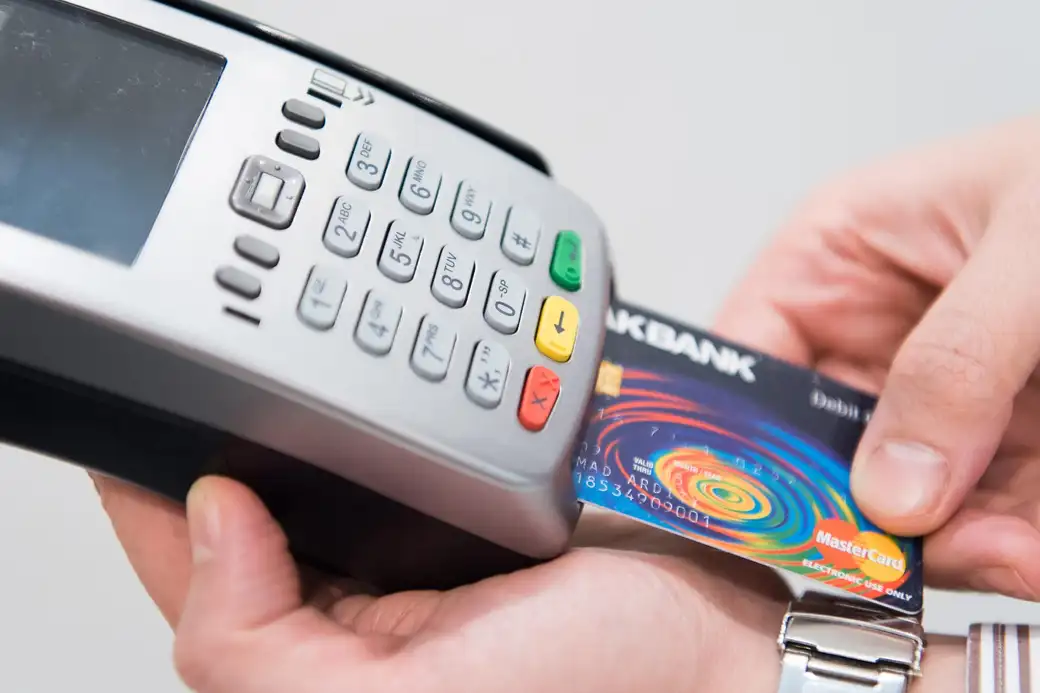
Debit or credit card. Convenient and expensive. Swyftx's NZD card deposits via Stripe carry a 2.734% fee, and where a third-party provider such as Banxa is involved the cost has been reported at around 1.99% plus a spread of up to 4%. On a NZ$5,000 purchase that range is between roughly NZ$137 and NZ$300 before you have bought anything. Use it for urgency, not routinely.
Crypto ATMs. More than 220 machines operate across New Zealand, mainly CoinFlip and Localcoin, in dairies, malls and petrol stations from Auckland to Invercargill. They are genuinely convenient and the rates are consistently poor — typically several percent worse than an exchange. Reasonable for a small cash purchase; not for accumulating.
The rule that saves the most money
Deposit by bank transfer, then buy. Buying directly with a card bundles the deposit fee, the provider spread and the trading spread into one number you cannot decompose. Separating the two steps makes each cost visible, and the visible ones are the ones you can reduce.
Platforms that take NZD
We are deliberately not going to publish a ranked list of exchanges, because this market changes faster than a page can be maintained and because the relevant checks are ones you can do yourself in two minutes. What we will do is describe the landscape and the checks.
Swyftx is now the largest platform serving New Zealanders directly, having absorbed Easy Crypto's customer base. It supports NZD deposits and withdrawals with no fee on bank transfers, and it supports withdrawal to external self-custody wallets — though it may request proof of wallet ownership as an anti-fraud and AML measure before releasing funds.
Independent Reserve operates in New Zealand with NZD deposits and has a long operating history in this region.
International exchanges accept New Zealand customers with varying NZD support — some take NZD directly, others route through card providers at worse rates. Several hold substantial international licences. What none of them generally have is New Zealand FSPR registration, which means no access to a New Zealand dispute resolution scheme if something goes wrong. That is a real trade-off to weigh rather than ignore, and it is why we say plainly on every CTA on this site that the venue we link to is offshore.
NZDD, the New Zealand dollar-backed stablecoin launched in late 2023 and backed 1:1 with NZD held at a local bank, remains an interesting piece of local infrastructure. In March 2026 the Financial Markets Authority issued a designation notice declaring it not to be a financial product under the FMC Act, on the basis that it is a payment tool rather than an investment — the first formal indication of how a New Zealand regulator reads a stablecoin. Issuing it is still a financial service, so fair conduct obligations apply.
The FSPR check, and why it matters
This takes ninety seconds and it is the single most useful piece of due diligence available to a New Zealand crypto buyer.
Cryptoassets are not specifically regulated here. The framework is assembled from existing law: the AML/CFT Act 2009, the Financial Service Providers (Registration and Dispute Resolution) Act 2008, and the Financial Markets Conduct Act 2013 where an asset qualifies as a financial product. Businesses that exchange or transfer value must register on the Financial Service Providers Register, and if they serve retail clients they must belong to an independent dispute resolution scheme.
The FMA's own consumer guidance is direct about the consequence: deal with providers on the FSPR, because registration in most cases gives you access to a dispute resolution scheme where you can take a complaint. That is not a guarantee of solvency or competence — Dasset was a New Zealand company and it still went into liquidation with millions unaccounted for — but it is a meaningful difference between having somewhere to complain and having nowhere.
Also relevant: from 1 July 2026 the Department of Internal Affairs becomes the single AML/CFT supervisor, replacing the three-supervisor model split between the Reserve Bank, the FMA and DIA. Virtual asset service providers fall under its supervision.
New Zealand's platform graveyard
Cryptopia — hacked for roughly NZ$30 million in 2019, liquidation ran to December 2024. Dasset — liquidation August 2023, about NZ$6.3 million of customer cryptoassets unaccounted for, Serious Fraud Office investigation. BitPrime — halted 2022. BitNZ — 2017. NZBCX — 2021. Easy Crypto and Kiwi-Coin — closed 2026. Buy on a platform; do not live on one.
The process, end to end
Assuming you have already set up a wallet — and if you have not, do that first using our setup guide, because a wallet you create in a hurry after buying is a wallet you back up in a hurry too.
One: open the account and verify. You will need identity documents. This is not optional and it is not a privacy failing on the platform's part — it is required by the AML/CFT Act, and from 1 April 2026 the CARF rules require reporting providers to collect identity and tax residency information as well. Expect it everywhere legitimate.
Two: deposit NZD by bank transfer. Use the exact reference the platform gives you. Deposits from an account in your own name; third-party deposits get frozen and generate compliance questions.
Three: buy what you intend to hold. Not more, on the theory that you will sell some later — every swap and sale is a potential taxable event and the round-trip costs money.
Four: withdraw to your own wallet, the same session. This is the step the platform's interface does not encourage and it is the point of the whole exercise. Get the receiving address from your wallet, verify it on your hardware device's screen if you have one, match the network exactly, send a small test amount, confirm, then send the rest. Our withdrawal guide covers the traps in detail.
Five: record it. Date, asset, amount, NZD value, fees, transaction hash. Two minutes now, and you will thank yourself.
Crypto ATMs and the ban that did not happen
Worth a short section, because the story is instructive about how New Zealand handles crypto policy.
In July 2025, Associate Justice Minister Nicole McKee announced an overhaul of the AML/CFT regime that included an in-principle decision to ban crypto ATMs and cap international cash transfers at NZ$5,000, targeting the means by which criminals "convert cash to high-risk assets such as cryptocurrencies".
By 2026 the position had changed. The Government decided not to proceed with a blanket legislative ban, adopting instead what it described as a targeted and proportionate approach after analysis found that less restrictive controls could address the risks. The proposed mechanism is a regulation-making power allowing maximum thresholds to be set for cash transactions involving virtual assets, and permitting cash payments for high-risk virtual assets to be prohibited if clear evidence of harm emerges. McKee's stated reasoning: "Banning something is a serious decision that should not be taken lightly."
So the machines remain — over 220 of them, operated principally by CoinFlip, which expanded into New Zealand in October 2023, and Localcoin. For buyers, the practical advice is unchanged: they are convenient and the rates are poor. If you want to buy NZ$50 with cash on a whim, fine. If you are building a position, use a bank transfer.
Records and tax from the first purchase
Start your records with the first transaction, not the fiftieth. Inland Revenue treats cryptoassets as property and requires you to be able to calculate the New Zealand dollar value of your transactions, and the cost base you establish on your first purchase is what determines your position on an eventual disposal years later.
The reason this is more urgent than it used to be is CARF. From 1 April 2026, reporting crypto-asset service providers must collect identity and transaction data and report it to IRD, with the first reports due by 30 June 2027 and information shared domestically and internationally. IRD has publicly urged crypto investors to get tax compliant. Your purchase is reported. Your eventual sale is reported. What happens in between, in your self-custody wallet, is not — and reconciling that gap is your job.
Buying itself is not a taxable event. Neither is withdrawing to your own wallet. What you are recording is the cost base, so that when you do dispose of something you can establish what you paid. Full detail in our IRD and CARF guide. General information, not tax advice.
Our view on the New Zealand on-ramp
The lesson of 2026 is not that any particular platform failed — Easy Crypto's wind-down was orderly and nobody lost money. It is that in a market of five million people, the platform you use is a temporary arrangement and the wallet you control is not. Treat every exchange, local or offshore, as a checkout: verify it on the FSPR, deposit by bank transfer, buy, withdraw the same day, and never let a balance accumulate somewhere you do not hold the keys.
Frequently asked
Questions on this topic
What happened to Easy Crypto?
Easy Crypto, New Zealand's largest homegrown platform with more than 350,000 users and around NZ$3.5 billion in cumulative transactions, was acquired by the Australian exchange Swyftx in March 2025 and stopped trading in New Zealand on 30 March 2026 after eight years. Customers were migrated to Swyftx, with the Brisbane team phoning those who had not moved. Trading history remained downloadable from the Easy Crypto site temporarily. The self-custodial Easy Crypto Wallet app reduced services, and the NZDD stablecoin business was being divested.
How do I buy crypto with New Zealand dollars?
Open an account with a platform, complete identity verification, deposit NZD by bank transfer, buy, then withdraw to your own wallet. Bank transfer is the cheapest deposit route almost everywhere — Swyftx charges nothing for NZD bank transfer deposits or NZD withdrawals, while card deposits carry meaningful fees. Before depositing anywhere, check the platform on the Financial Service Providers Register, because FSPR registration generally brings access to an independent dispute resolution scheme.
Is POLi still available in New Zealand?
Yes. POLi continues to operate in New Zealand, locally owned by Merco after Australia Post terminated the Australian service in 2023. Its mechanism has changed for the better: New Zealand's open banking regulations came into force on 1 December 2025, after which banks signed partnership deals allowing POLi to connect through bank-approved APIs rather than the screen-scraping approach that Consumer NZ had criticised for years as a breach of bank terms and conditions. Availability at any particular merchant varies.
Which crypto platforms accept NZD?
Swyftx supports NZD deposits and withdrawals following its acquisition of Easy Crypto. Independent Reserve operates in New Zealand with NZD deposits. Several international exchanges accept NZD by card or through payment providers, generally at worse rates than a local bank transfer. There are also more than 220 crypto ATMs across the country, operated mainly by CoinFlip and Localcoin, though ATM rates are consistently poor. Always verify FSPR registration before depositing.
Should I leave my crypto on the exchange after buying?
No, and New Zealand's own history is the argument. Cryptopia was hacked for roughly NZ$30 million in 2019 and its liquidation ran until December 2024. Dasset went into liquidation in August 2023 with about NZ$6.3 million of customer cryptoassets unaccounted for, prompting a Serious Fraud Office investigation. BitNZ, NZBCX and BitPrime all folded. Treat any exchange as a checkout rather than a vault: buy, then withdraw the same session to a wallet you control. See how to withdraw safely.
Next in this cluster