Explainer — the full taxonomy

Every type of crypto wallet, explained properly

The terminology in this space is a mess, largely because marketing departments keep inventing categories. Here is the actual structure: two axes that matter, and about ten form factors that sit inside them.

  • 2 axes Custody and key exposure decide everything
  • 10 Form factors worth knowing
  • 1 test Can you restore it without the company?
  • 0 Wallets that actually store your coins

First, the thing nobody tells you: wallets don't hold coins

This sounds pedantic and it is the single most useful correction anyone can make to a beginner's mental model. Your crypto is not in your wallet. It is on a blockchain — a public ledger replicated across thousands of machines — and it has been there the whole time. What your wallet holds is a private key: a very large number that mathematically proves you are entitled to move the balance recorded at a particular address.

Once you internalise that, several things that seemed mysterious become obvious. Why does the balance reappear when you restore a recovery phrase on a completely different device? Because the coins were never on the old one. Why can't the manufacturer help when you lose your phrase? Because they never had the key — you generated it yourself, inside your own device. Why is a transaction irreversible? Because the ledger records a valid signature, and there is no authority with the power to unrecord it.

So every wallet in the taxonomy below is really a key management strategy. The question a wallet answers is: where does the key live, who can use it, and what has to go wrong before you lose control of it.

Axis one: custody — who can sign?

Custodial. A company holds the keys and you hold an account. This describes exchange balances, broker accounts, and any app where access depends on an email and password that support can reset. It is convenient and it has a reset link, which is genuinely valuable, and you carry the company's risk. New Zealand has an unusually long list of platforms that failed while holding customer assets — Cryptopia, Dasset, BitNZ, NZBCX, BitPrime — which makes this trade-off less theoretical here than elsewhere.

Non-custodial. You hold the keys. Nobody can freeze your funds, nobody can lose them on your behalf, and nobody can help you if you lose the recovery phrase. Everything reviewed on this site is non-custodial. The full comparison is on our custody page.

You can tell them apart in one question: if this company vanished tonight, could I still spend tomorrow? If yes, non-custodial. If it depends on a password reset, custodial. Marketing language — "decentralised", "Web3", "self-sovereign" — is not evidence either way.

Axis two: temperature — has the key touched the internet?

Hot. The key sits on a device that is connected: a phone, a laptop, a browser extension. Fast, convenient, and reachable in principle by any code that gets execution on that machine.

Cold. The key was generated inside a device with no network stack and cannot be read by a connected one. Only signatures cross the boundary. This is the property that defeats remote malware entirely, and it is the reason hardware wallets exist.

A frequent confusion worth clearing up: a hardware wallet plugged into a laptop is still cold, because what travels down the cable is a signature and not a key. Conversely, an app that generated your seed on your phone and then told you to keep it offline is not cold — the key was born on a networked device, and airplane mode afterwards does not retroactively change that.

Form factors

The ten kinds of wallet you'll actually encounter

Each of these sits somewhere on the two axes above. We have marked the custody and temperature of each, plus who it is genuinely for.

Hardware wallet

Non-custodial Cold

A dedicated device that generates and holds keys in a secure chip and signs transactions on request. The key never leaves it, and its own screen shows you what you are approving so malware on your computer cannot lie about the destination. NZ$99 to NZ$780 depending on model.

For: anyone holding more than about NZ$2,000. Compare eight devices

Mobile wallet

Non-custodial Hot

An app that keeps keys in your phone's hardware-backed keystore. The best balance of convenience and safety for everyday amounts, and modern phones are a genuinely decent place to keep a key — far better than a laptop.

For: spending balances and daily use. Compare five apps

Desktop wallet

Non-custodial Hot

Software on Windows, macOS or Linux. Bigger screen means better address verification, coin control and fee visibility; bigger attack surface means more ways in. Best used as an interface to a hardware wallet rather than as the key store itself.

For: coin control, multisig, careful verification. Compare desktop wallets

Browser extension wallet

Non-custodial Hottest

Keys held inside your browser so that websites can request signatures. Necessary for using decentralised applications, and the most exposed place a key can live — it sits in the same process as every page you visit and every other extension you have installed.

For: DeFi and dApps, with a small balance or a hardware wallet attached. MetaMask review

Paper wallet

Non-custodial Cold, sort of

A printed private key and address. The original cold storage method, now obsolete: generating one safely is fiddly, it encourages address reuse, and spending from it usually means importing the key into software — at which point it stops being cold.

For: nobody in 2026. Why not, in detail

Multisig wallet

Non-custodial Cold

An address requiring multiple independent keys to spend — typically two of three. Removes the single device and single phrase as points of failure, survives losing one key, and gives your estate a workable path. The strongest arrangement available to a private individual.

For: large holdings, trusts, inheritance planning. Multisig explained

MPC wallet

Depends Usually hot

The key is split into mathematical shares that sign collaboratively without ever reconstructing. Elegant, and its custody status depends entirely on who holds the shares. If a company holds enough to sign, you have custody with extra cryptography.

For: people who read the specific product's documentation carefully.

Smart contract wallet

Non-custodial Hot

An account controlled by code rather than a single key, enabling spending limits, daily caps, social recovery through guardians and batched transactions. You gain features and take on contract risk plus a social attack surface.

For: active on-chain users; not our choice for a large long-term holding.

Burner wallet

Non-custodial Hot, deliberately

A disposable wallet created for one risky interaction and abandoned afterwards. Fund it with only what the interaction needs, so a malicious signature caps your loss at the burner's balance. Cheap, effective, and underused.

For: anyone minting, claiming airdrops or connecting to unfamiliar contracts.

Exchange / fiat wallet

Custodial Not yours

A balance a platform holds for you, in crypto or in New Zealand dollars. Useful as a checkout for buying and selling, and not storage — it is a claim against a business, and the FSPR is where you check whether that business has any accountability attached.

For: the hours between placing an order and withdrawing. Buying with NZD

Terms you'll see that don't describe a wallet type

Some of the vocabulary in this space describes features or marketing positions rather than categories, and mistaking them for types causes confusion.

Web3 wallet. Not a type — a description of a wallet that can connect to decentralised applications. Almost all browser extension and mobile wallets can. Says nothing about custody or key exposure.

DeFi wallet. Same. Any non-custodial wallet on a smart-contract chain can interact with DeFi. Note that at least one major exchange named a product "DeFi Wallet", which is why so many people search for how to withdraw from one — it is a specific company's app, not a category.

Spot wallet. Exchange terminology for the balance available for spot trading, as distinct from a margin or futures balance. Entirely custodial, entirely internal to that platform.

External wallet. What an exchange calls any wallet that is not theirs. From your perspective it is simply your wallet. You will meet this phrase when you go to withdraw, and Swyftx and others may ask you to verify ownership of an external address as an anti-fraud measure before releasing funds.

Physical or hard wallet. Informal synonyms for a hardware wallet. Occasionally "physical wallet" is used for a metal seed backup plate, which is a different object entirely — a backup, not a signer.

Which type do you actually need?

For the overwhelming majority of New Zealanders reading this, the answer is two wallets: a hardware wallet holding whatever you consider savings, and one mobile wallet holding a deliberately small amount you actually spend and experiment with. That is it. No multisig, no MPC, no smart accounts.

Add multisig when the amount would materially change your life if it disappeared, or when someone other than you needs a path to it — an executor, a business partner, a trust. Add a burner habit if you interact with new contracts. Skip paper wallets, and treat exchange balances as a checkout queue rather than a place to stand.

If you are trying to decide between the two main options, our hardware versus software page gets you there in three questions, and how many wallets you need covers running both without them quietly merging into one.

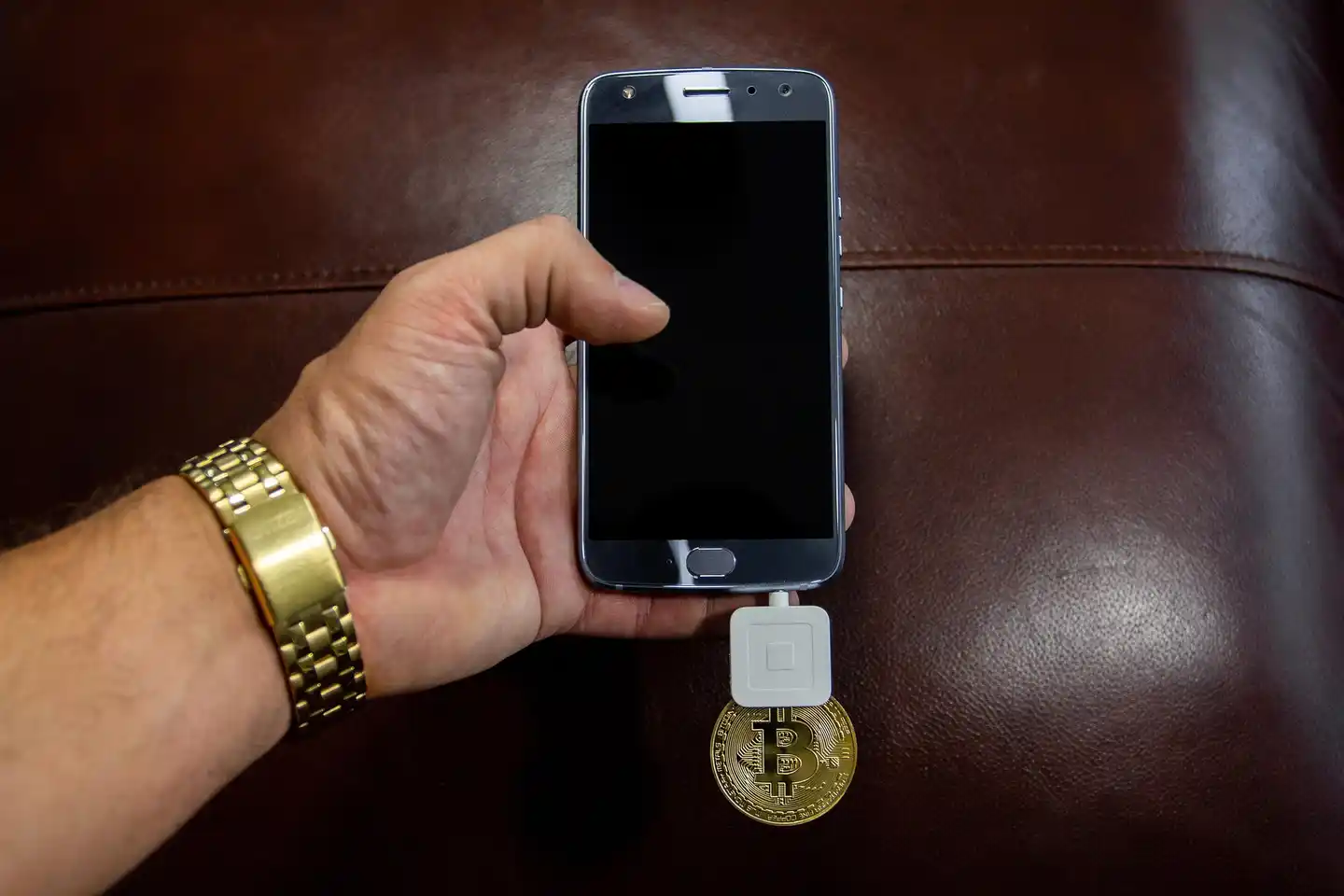
Contactless payment being made, illustrating everyday wallet use versus long-term storage
The useful analogy: a hot wallet is the cash in your pocket, a hardware wallet is the safe at home, and an exchange balance is money left on a shop counter.

A note on recovery phrase portability

Most non-custodial wallets use the same BIP39 standard, which means your twelve or twenty-four words are not tied to the brand that generated them. You can restore a Trezor phrase in a software wallet, or a mobile wallet's phrase on a hardware device. That portability is a real safety property: your access does not depend on any single company continuing to exist. Proprietary backup schemes — Tangem's card cloning, for instance — trade that portability for convenience.

Wallet types FAQ

Questions about wallet types

How many types of crypto wallets are there?

It depends how you slice it, which is why the answer varies between articles. There are really two axes. By custody: custodial or non-custodial — who can sign. By key exposure: hot or cold — whether the key touches the internet. Everything else is a form factor within that grid: hardware, mobile, desktop, browser extension, paper, multisig, MPC, smart contract, burner. Nine or ten form factors, two axes that actually matter.

What is a fiat wallet versus a crypto wallet?

A fiat wallet is not really a wallet at all — it is a currency balance held for you by a platform, in New Zealand dollars or another government currency, waiting to be spent on crypto or withdrawn to a bank. It is a ledger entry at a company. A crypto wallet holds keys that control assets on a blockchain. The confusion is understandable because exchanges show both in the same interface, but they are different things: one is a claim against a business, the other is cryptographic control. See non-custodial wallets explained.

What is a burner wallet in crypto?

A burner is a wallet you create deliberately for one purpose and abandon afterwards — minting from an unknown project, claiming an airdrop, connecting to an application you do not trust. You fund it with only what that interaction needs, so if you sign something malicious the loss is capped at the burner's balance and your main wallet is untouched. It is a genuinely useful habit for anyone who interacts with new smart contracts, and it costs nothing but a minute of setup.

What is an MPC wallet and is it non-custodial?

MPC stands for multi-party computation. Instead of one private key, the key is mathematically split into shares held in different places, and signing happens collaboratively without any single share ever reconstructing the whole key. Whether it is non-custodial depends entirely on who holds the shares. If a company holds one and can sign with a second, that is custody with extra steps. If you hold all shares across your own devices, it is self-custody with better redundancy. Read the specific product's documentation rather than trusting the acronym.

What is a smart wallet or smart contract wallet?

A smart wallet is an account controlled by a smart contract rather than a single key, which lets it do things a plain key cannot: spending limits, daily caps, social recovery through nominated guardians, transaction batching, and paying network fees in a token other than the chain's native one. The trade-off is that you now depend on the correctness of that contract code as well as on key security, and account recovery through guardians introduces a social attack surface. Promising technology, and not where we would put a large long-term holding today.

Next in this cluster

Keep reading